How to Properly Manage Your Own Price Database and Check Value Changes in Your Collection

Keeping a personal journal of coin identification and their prices becomes the basic method for every serious collector who treats collecting as putting money into physical things.
Without clear facts about the amount spent and the current worth of an item, it is not possible to make good choices about purchasing, letting go of, or covering your items with insurance.
A well-kept price journal allows you to study the changes in your collection’s total worth, helping you quickly see successful purchases and those not performing as well.
What Must Be Included in the Database
To have an effective look at your collection, simply writing down the coin’s name and its current price is not enough.
You need to record a complete group of facts, allowing you to check the item against others and follow its price movements in the current market.
Item Identification
The complete name, the country, the release year, the face value, and the mint mark these details making it simple to find the item in official catalogs.
Condition Description
The physical state of the item, the grade (for example, MS-65, AU-50), and noting any damages or repairs, this aspect most strongly affects the price, meaning its record is necessary.
Purchase Date
The day, month, and year you got the item are needed for figuring out the time you owned it and the yearly gain percentage.
Purchase Price
The exact amount of money you paid, including all auction fees, taxes, and shipping costs, this number standing as your starting investment total.
Purchase Source
The seller’s name, the auction house, or the shop, helps you later to confirm the item’s true history or ownership trail.
Current Market Price
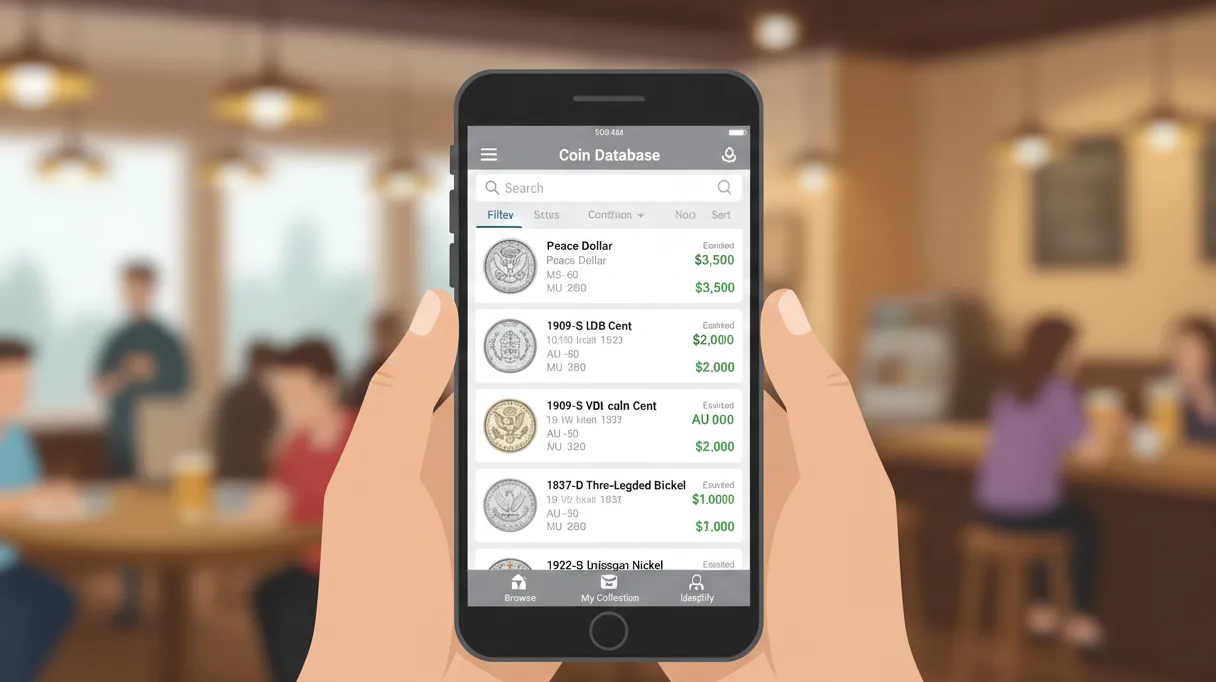
The estimated value right now, a number that you must update often, using official information from sales at auction, you can check it with a coin scanner app.
Evaluation Date
The day you last refreshed the current market price, this action prevents you from using old and incorrect information for your study.
The database can be a simple digital sheet (for example, in Excel or Google Sheets) or a special program designed for collectors, the file format not mattering as much as the completeness of the data inside.
Rules for Collecting Market Price Facts
Finding the correct and non-inflated market price for each item is the hardest part, making it wrong to just use the price asked by the first seller you find. You must look for clear facts from completed sales.
Using records from closed sales at big, known auction houses guarantees the price is real, showing the result of honest bidding among buyers.
- Comparing your item only with objects having the same grade, the same mint, and the same release year, knowing a difference of one grade point or a missing mint mark can change the price by a large amount.
Using prices only from sales that happened in the last six to twelve months, older facts do not correctly show the situation in the current market.
- For a scarce item that does not sell often, writing down three prices — the lowest, the average, and the highest price of the last sales — is useful, giving you a picture closer to reality.
If you cannot find any sales of the item in the past two years, it means the item is very hard to sell quickly, making it better not to set a current price, or just set it at the price you paid.
How Often to Update the Database
The frequency of updating your database depends on why you collect and how busy the market is.
- If your collection is looked at as a financial asset, updates must be done every three months, which allows you to quickly react to changes in market conditions.
- For a collection you plan to keep for more than ten years, updating two times each year is enough, as this is plenty to see long-term growing patterns.
- Seeing a big sale of an item like yours at auction means its price must be updated right away, as such deals have the power to suddenly change how the market values the item.
Updating the price means more than just replacing a single number; it requires looking again at and checking the latest auction results.
How to Check Changes in Your Collection
Checking the facts in your price journal inside the free coin identifier app helps you make sensible choices, stopping you from acting on sudden feelings.
Finding Collection “Stars”
Finding the items showing a much higher average yearly gain than others shows you which market parts are growing fastest.
This might mean it is wise to put more money into similar items.
Seeing “Dead Weight”
Finding items that are not gaining value or are losing value shows you items acting as “dead weight”.
If an item has not grown in value for five to seven years, selling it can free up money for better new purchases, assuming it holds no personal meaning for you.
Comparing with Other Options
Checking the average yearly gain of your collection against the growth of other assets, like bank savings or stock funds, helps you see the real performance.
If the collection grows slower than a safe bank account, it signals a problem.
Checking Against Inflation
Always checking the value growth in regular prices against the rate of inflation, understanding a collection growing 5% in a year while inflation was 7% means you lost money in real terms.
Checking How Easy It Is to Sell
Looking at the “Evaluation Date” section helps, noting that an item without an updated market price for a long time means it sells very rarely.
Selling it quickly will be hard if you suddenly need the money.
Managing the Collection Based on Facts
Your price journal acts as a tool for management, not just a simple listing.
- Making a Sale Decision. The choice to sell an item should always come from either a very high gain or a long time without growth, making it possible to sell a high-performing item to take the profit and put the money back into new items.
- Making a Grading Decision. If you see that the market price for your item in a certified grade (MS-65) is five times higher than the price of a non-certified (UNC) item, paying for professional grading is wise. This process can quickly increase the item’s worth and make it easier to sell.
- Insurance Coverage. As the current total value of the collection goes up, you need to look again at the amount of insurance coverage, the insurance total needing to be very close to the Current Value (CV).
Smartly keeping a price database and regularly checking it forms the base for turning a collection from a group of items into a helpful money investment list. Always working with numbers that can be checked, and not just with hopeful feelings, will help you succeed.